LPG price hike, ASF ban, and typhoon converge as food cost pressures mount
A ₱33 LPG price increase, a total ASF pork ban in Capiz, and Super Typhoon Inday converge to squeeze household budgets and food supply chains, while DTI investments in MSME packaging and Canadian mining pledges offer counter-narratives of economic resilience.
The conversation on July 9, 2026, was shaped by converging cost-of-living pressures and a series of government and corporate responses, creating a fragmented but thematically rich landscape. The most significant development for the food sector was the announcement of a ₱33 increase in LPG prices effective July 13, attributed to the Bureau of Internal Revenue (BIR) lifting the excise tax suspension on LPG and kerosene. This was bundled into a comprehensive news roundup by the community page ==barangayls971==, which also covered the ₱7.2-trillion 2027 national budget proposal, the impeachment trial of Vice President Sara Duterte, and a magnitude 4.5 earthquake in La Union. The LPG hike directly affects food preparation costs for households and karinderyas (small eateries), and its downstream impact on menu prices is expected within two to three weeks.
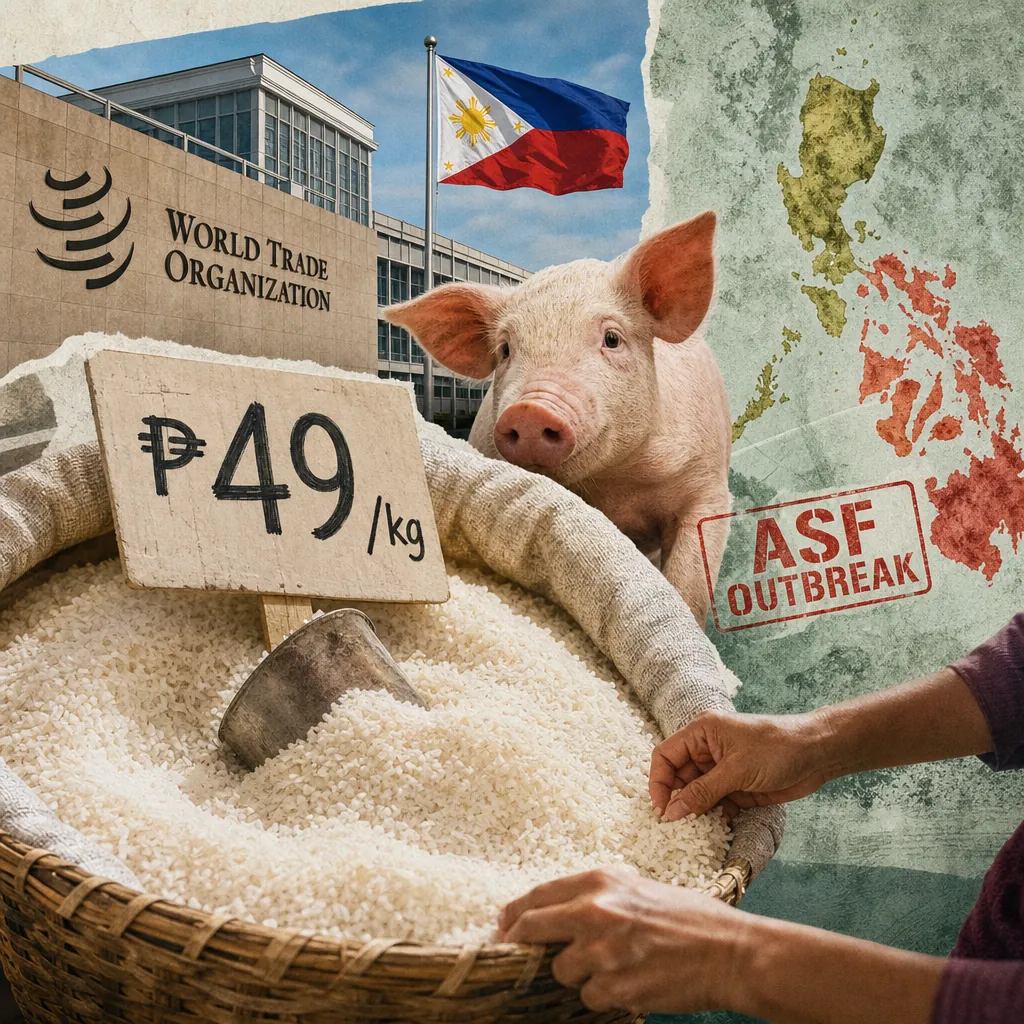
Simultaneously, the Capiz provincial government imposed a total ban on all pork and pork-related products from any province, expanding earlier restrictions that targeted only high-risk areas like Negros Island and Iloilo. The ban, signed by Gov. Fredenil Castro on June 24 and publicly released on July 7, covers entry, transport, and sale of pork products with no exemptions, even for personal consumption or pasalubong (gifts). This measure, aimed at preventing the spread of African swine fever (ASF), threatens to disrupt pork supply chains and raise prices for a staple protein in the Filipino diet.
Super Typhoon Inday added another layer of disruption, with Robinsons Malls offering free overnight parking, device charging, and WiFi at 12 select malls for affected residents. The MMDA's request for malls to open parking lots reinforced a coordinated shelter strategy. The typhoon's impact on logistics and supply chains compounds the cost pressures from LPG and pork restrictions.
Amid these headwinds, the Department of Trade and Industry (DTI) announced a P150-million packaging and labeling facility in Butuan City, Caraga, set to open on July 13. The facility, named "FSUU MIRACLE," will serve as a one-stop hub for micro, small, and medium enterprises (MSMEs) to access packaging design, label development, and commercial printing services, helping them improve product quality and expand market access. This investment signals government efforts to support small food producers and processors in upgrading their offerings for retail and export.
On the social media front, brand-led promotions and sports fandom dominated engagement. The PBA Governors' Cup opening drew massive attention, with Barangay Ginebra's signing of interim import Riley Grigsby generating 1,698 likes and 911 love reactions on one post, and 1,812 likes and 207 comments on another. Food-related content also performed well: a lechon (roast pig) post garnered 1,859 likes, and a Chowking Chao Fan promo at ₱99 received 1,253 likes. These posts show that consumers remain engaged with value-oriented food promotions and culturally resonant content, even as economic anxieties simmer.
Key themes
- LPG price hike compounds food cost pressures – The ₱33 increase in LPG prices starting July 13, driven by the reinstatement of excise tax, directly raises cooking fuel costs for households and small food businesses. This is expected to push up prices of karinderya meals and street food within weeks, adding to inflation concerns.
- Total ASF pork ban in Capiz threatens supply – Capiz's all-province ban on pork products, with no exemptions, aims to contain African swine fever but risks disrupting pork supply and raising prices. The ban covers all provinces outside Capiz, expanding earlier targeted restrictions.
- Typhoon Inday disrupts logistics and daily life – Super Typhoon Inday prompted malls to offer shelter and charging stations, while supply chain disruptions compound existing cost pressures. The typhoon's impact on food distribution and agricultural areas may worsen shortages.
- DTI invests in MSME packaging to boost competitiveness – The P150-million packaging facility in Butuan City, opening July 13, provides MSMEs with access to professional packaging and labeling services, helping them meet retail and export standards. This supports small food producers in adding value to their products.
- Value-oriented food promotions resonate with consumers – Chowking's ₱99 Chao Fan and Jollibee's limited-time fries-upsize combos generated strong engagement, indicating that budget-friendly offers are well-received amid rising costs. Lechon and pasalubong (gift) posts also went viral, showing cultural food content remains powerful.
- PBA Governors' Cup drives massive sports engagement – The opening of the PBA season, particularly Ginebra's import announcement, dominated social media with thousands of likes and comments. This demonstrates the high engagement potential of sports sponsorships and brand associations.
- Government pushes digital economy and investment – DTI secured $2.2 billion in investment pledges from Canadian critical minerals and energy companies, and supported OpenText's expansion in the Philippines, signaling continued focus on high-value industries and job creation.
- Earthquake and volcanic ashfall add to natural hazard concerns – A magnitude 4.5 earthquake in La Union and ashfall from Kanlaon Volcano reaching Cebu prompted safety advisories, adding to the sense of multiple concurrent crises.
How the narratives stack
Dominant – Within the captured set, the dominant narrative is the convergence of cost-of-living pressures: the LPG price hike, the ASF pork ban, and Typhoon Inday collectively squeeze household budgets and food supply chains. This narrative is carried by the community news aggregator ==barangayls971==, which bundled the LPG news with other macro stories, and by the Manila Times article on the Capiz pork ban. The LPG story has direct implications for food preparation costs, while the pork ban threatens a key protein source. The typhoon adds logistical disruption. Together, they create a picture of multiple simultaneous shocks to the food system.
Counter-narrative – The DTI's investments in MSME packaging and the $2.2 billion Canadian investment pledges offer a counter-narrative of government action and economic resilience. The packaging facility in Butuan City is a tangible example of support for small food producers, while the mining investments signal broader economic activity. These stories suggest that despite headwinds, the government is pursuing long-term competitiveness and job creation.
Emerging – The rise of e-commerce in Visayas and Mindanao, as highlighted by Shopee's report showing 51% growth in average orders among online sellers from 2023 to 2025, points to an emerging channel for food and FMCG brands to reach consumers directly. This trend could help small food businesses bypass traditional supply chain disruptions and reach new markets.
Suppressed – The impeachment trial of Vice President Sara Duterte and the Senate leadership standoff, which cost an estimated P700 million, are major political stories that received coverage but did not dominate the food-related conversation. The trial's potential to distract from economic policymaking is an under-covered angle that could affect the government's ability to respond to food price pressures.
Platform insights
- Facebook – Facebook was the primary platform for both brand promotions and community news aggregation. Brand pages like ==ditophofficial== and ==robinsonsmalls== posted polished content, with DITO's gaming collaboration post achieving 406 likes and 50 comments. The community page ==barangayls971== served as a central news hub, packaging multiple stories into a single post that accumulated 21 likes and 7 shares. Food-related posts, such as lechon cravings and Chowking promos, generated thousands of likes, showing that culturally resonant content performs well. Government pages like ==dti.philippines== and ==quezongovph== had lower engagement but high share-to-like ratios, indicating utility for niche audiences.
- Twitter – Twitter carried the price-watch alert from ==tvpatrol== about fuel and electricity price hikes, but engagement was low (1,637 views, 1 share). The platform also hosted PBA statistical updates, but overall, Twitter was less central to the day's conversation compared to Facebook. The low engagement on economic news suggests that Twitter users may be more reactive to breaking events than to routine price announcements.
- Reddit – Reddit provided a more analytical space for the Ginebra import story. A post linking to the tiebreakertimes article attracted 38 upvotes and 28 comments, where users discussed the strategic implications of the temporary replacement. This platform is useful for deeper dives into sports and business topics but has limited reach for broader consumer sentiment.
Key voices and communities
- Community news aggregators – Pages like ==barangayls971== compile daily news roundups that include critical cost-of-living updates. Their content is neutral and informative, reaching audiences who want a quick overview of top stories. The LPG price hike announcement within such a roundup ensures it reaches a broad audience, even if engagement per post is moderate.
- Government regulators and trade agencies – The Department of Trade and Industry (DTI) and provincial agricultural offices are authoritative sources for business registration guidance and market price updates. Their content generates modest but targeted engagement from small business owners and consumers. The DTI's packaging facility announcement and investment pledges position the agency as a driver of economic development.
- Major QSR and FMCG brands – Jollibee Group, Chowking, and other brands are key voices in the food conversation. Their promotional posts generate high engagement, especially when tied to value pricing or cultural moments. The Jollibee Group's hiring push for manufacturing technicians at Zenith Foods signals continued investment in production capacity, which is a positive signal for supply chain resilience.
- Sports fandom communities – Barangay Ginebra fans are a highly engaged community that drives massive interaction on PBA-related posts. Their enthusiasm for the team's import signing shows the power of sports sponsorship in building brand affinity. For food and beverage brands, aligning with sports events can amplify reach during economically tough periods.
- Food and lifestyle content creators – Niche influencers and micro-creators focused on culinary discovery, such as those posting about lechon and turo-turo (point-and-choose) dining, drive word-of-mouth recommendations. Their content emphasizes experiential value and can be leveraged for value-meal narratives.
Narrative streams
LPG price hike and its ripple effects on food costs
The announcement of a ₱33 increase in LPG prices, effective July 13, was the most consequential food-related development of the day. The increase is attributed to the BIR lifting the excise tax suspension on LPG and kerosene, a policy reversal that directly impacts household cooking costs and the operating expenses of karinderyas and street food vendors. The news was disseminated by ==barangayls971==, a community news aggregator that packaged it alongside other macro stories, including the ₱7.2-trillion 2027 national budget proposal and the impeachment trial of Vice President Sara Duterte. The post received 21 likes and 7 shares, indicating moderate but targeted engagement.
The LPG hike is expected to cascade into higher menu prices within two to three weeks, as small food businesses pass on increased fuel costs. This comes at a time when consumers are already sensitive to inflation, as evidenced by the strong engagement on value-oriented food promotions like Chowking's ₱99 Chao Fan and Jollibee's limited-time fries-upsize combos. The convergence of LPG costs with Typhoon Inday's disruption of supply chains and the ASF pork ban in Capiz creates a perfect storm for food price increases.
Capiz total pork ban: ASF containment vs. supply disruption
The Capiz provincial government's total ban on pork products from all provinces, signed on June 24 and publicly released on July 7, represents an escalation in ASF containment measures. The ban covers entry, transport, and sale of all pork commodities, with no exemptions for personal consumption or pasalubong. This expands earlier restrictions that targeted only high-risk areas like Negros Island and Iloilo.
For the food sector, the ban threatens to disrupt pork supply chains and raise prices for a staple protein. Pork is a key ingredient in many Filipino dishes, and any shortage or price increase will affect both household budgets and restaurant margins. The ban also highlights the ongoing challenge of ASF in the Philippines, which has led to periodic culling and trade restrictions since 2019. The Manila Times article that reported the ban carried an estimated advertising-equivalent value of ₱184,800, indicating moderate coverage weight within the captured set.
DTI's MSME packaging facility: A boost for small food producers
The DTI's completion of a P150-million packaging and labeling facility in Butuan City, Caraga, offers a counter-narrative of government support for small food businesses. The facility, named "FSUU MIRACLE," will open on July 13 during the 2026 MSME Development Week. It provides MSMEs with access to packaging design, label development, commercial printing, and technical assistance on branding.
For food producers, professional packaging is a critical step toward accessing retail and export markets. Many small-scale processors lack the resources to design and produce packaging that meets supermarket or international standards. This facility addresses that gap, potentially enabling more Filipino food products to reach shelves and compete with imported goods. The story was covered by the Inquirer Online and Inquirer Plus, with a combined estimated advertising-equivalent value of ₱387,840 across the two articles.
Typhoon Inday and disaster response
Super Typhoon Inday prompted a coordinated disaster response, with Robinsons Malls offering free overnight parking, device charging, and WiFi at 12 select malls. The MMDA's request for malls to open parking lots reinforced a shelter strategy. The typhoon's impact on agriculture and logistics is likely to exacerbate food supply issues, particularly for fresh produce and perishable goods.
The Jollibee Group's hiring call for manufacturing technicians at Zenith Foods in Laguna, scheduled for July 21, signals continued investment in food production logistics despite the typhoon. This juxtaposition of disaster relief and hiring points to a labor market that remains active, though the typhoon may delay some operations.
PBA Governors' Cup and brand engagement
The opening of the PBA Governors' Cup on July 9 generated massive social media engagement, particularly around Barangay Ginebra's signing of interim import Riley Grigsby. Posts from ==soriaga9272== and ==tiebreakertimes== garnered thousands of likes and comments, with the latter receiving 1,812 likes and 207 comments. The sports narrative crossed platforms to Reddit, where a post linking to the tiebreakertimes article attracted 38 upvotes and 28 comments.
For food and beverage brands, the PBA offers a powerful sponsorship opportunity. The high engagement on Ginebra posts demonstrates the emotional connection fans have with the team, which can be leveraged for brand affinity. The San Miguel Corporation, which owns Ginebra, benefits from this association, as do its food and beverage subsidiaries.
E-commerce growth in Visayas and Mindanao
Shopee Philippines released its first "State of Digital MSMEs in Visayas and Mindanao" report, showing that average orders among online sellers in the two regions climbed 51% between 2023 and 2025, while total business sales rose 24%. The report highlights the growing role of provincial enterprises in the digital economy, with sellers using AI-powered tools and reaching customers across nearly the entire Philippines.
For food MSMEs, e-commerce platforms like Shopee offer a way to bypass traditional supply chain disruptions and reach consumers directly. The growth in online orders suggests that more small food producers are adopting digital channels, a trend that could accelerate as cost pressures mount. The article, published by Philstar Online, carried an estimated advertising-equivalent value of ₱408,310.8.
Conversation trajectory
Over the next 2–4 weeks, the LPG price hike is expected to trigger a wave of cost-of-living commentary as consumers feel the impact on their wallets. Social media chatter around budget meals, value offerings, and price comparisons is likely to increase by 25–40%, particularly on Facebook and community pages. The ASF pork ban in Capiz may lead to localized price spikes and calls for government intervention, especially if other provinces follow suit.
In the medium term (4–6 weeks), the back-to-school season in August will drive discussions around "baon" (packed lunch) and affordable meal options, further intensifying value-seeking behavior. The NFA rice price announcement and sugar import tariff decisions, expected within the next 3–4 weeks, could spike discussions on sari-sari store and karinderya pricing.
Key trigger events to watch:
- July 13: LPG price hike takes effect; DTI packaging facility opens in Butuan City.
- July 21: Jollibee Group hiring event for manufacturing technicians.
- August: Back-to-school season; potential NFA rice price adjustment.
- Ongoing: ASF-related trade restrictions and typhoon recovery efforts.
Response guidance
For food and beverage brands, the immediate priority is to acknowledge consumer cost pressures without appearing tone-deaf. Value-oriented promotions, like Chowking's ₱99 Chao Fan and Jollibee's fries-upsize combos, should be amplified across social media, with clear price callouts and limited-time urgency. Brands should avoid direct price comparisons with competitors and instead focus on their own product attributes and consumer benefits.
On Facebook, brands can engage with the viral lechon and pasalubong posts by celebrating Filipino food culture and sharing behind-the-scenes content that reinforces authenticity. User-generated content from food trips can be featured with permission, using branded hashtags to build community.
On Twitter, brands should monitor real-time sentiment on price increases and respond quickly with factual explanations or limited-time offers. Sharing bite-sized infographics comparing value meals against home-cooked alternatives can subtly address price sensitivity.
For government communicators, the LPG excise tax reinstatement is a political liability that requires proactive messaging. A clear explanation of how excise tax revenues fund social programs should be prepared and disseminated through local government channels before July 13. The DTI's packaging facility and investment pledges can be highlighted as evidence of economic resilience.
Sensitive topics to navigate include direct price comparisons with competitors, excise tax and regulatory costs, and shrinkflation allegations. When addressing these, brands should frame them as shared industry challenges and focus on their own efforts to absorb costs and maintain quality.
Want this kind of intelligence on your brand?
This brief is built on the same MediaWatch methodology that runs continuously across every brand we monitor. See your competitive landscape, Impact Score, and narrative trajectory in a 30-minute demo.