Triple Crisis and Impeachment Trial Dominate as Typhoon Inday, Kanlaon Eruption, and Earthquakes Test Government Response
On July 9-10, 2026, the Philippines faced a convergence of natural disasters—Typhoon Inday, Kanlaon eruption, and earthquakes—while the impeachment trial of Vice President Sara Duterte continued, creating a complex information environment with high public anxiety and political polarization.
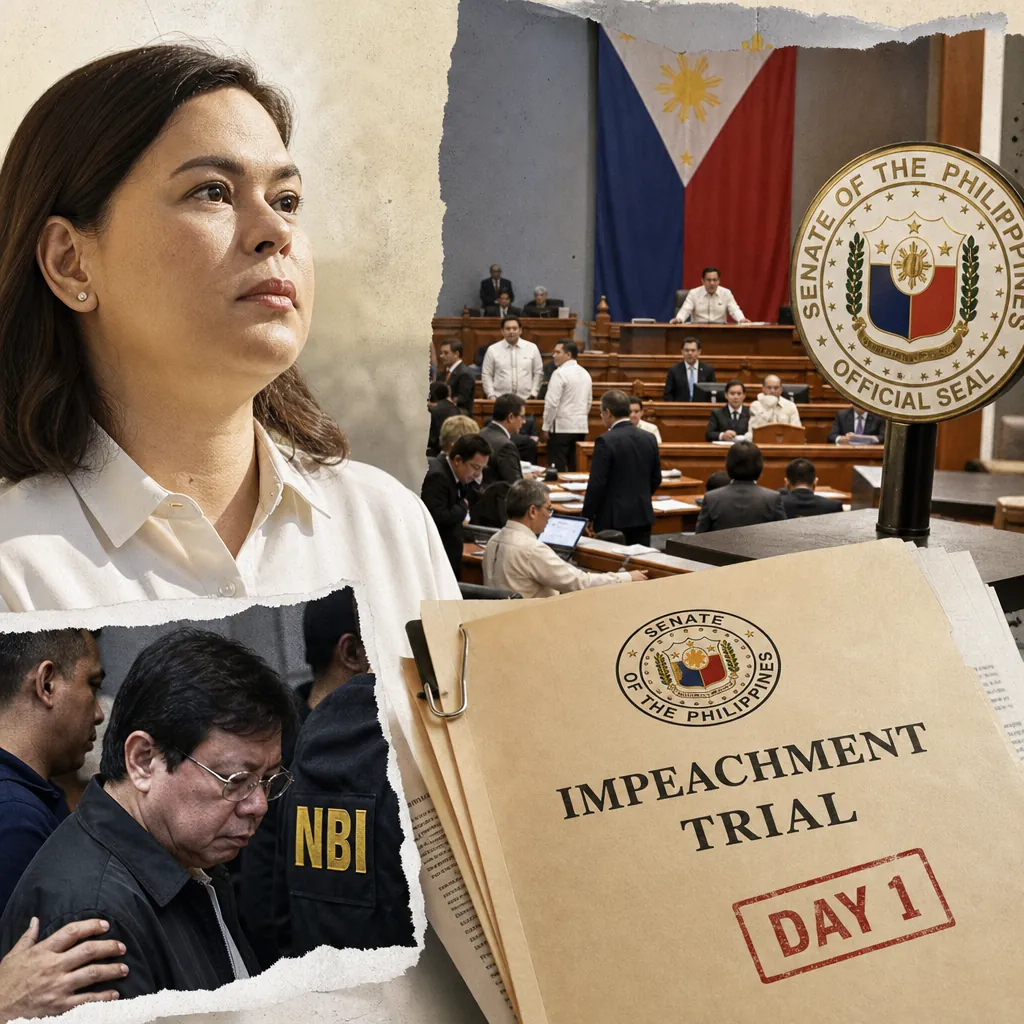
The evening of July 9 and morning of July 10 saw the Philippines grappling with a multi-hazard crisis as Typhoon Inday (international name: Bavi) approached, Kanlaon Volcano erupted, and a magnitude 4.9 earthquake struck off Eastern Samar. Simultaneously, the impeachment trial of Vice President Sara Duterte entered its first week, creating a dense news cycle that tested government communications and public resilience.
Key themes
- Multi-hazard disaster response coordination – The convergence of Typhoon Inday, Kanlaon ashfall, and earthquakes forced government agencies to manage multiple crises simultaneously. PAGASA issued heavy rainfall warnings, PHIVOLCS monitored volcanic and seismic activity, and local government units (LGUs) coordinated class suspensions and emergency responses. The MMDA's consolidated class suspension list for Metro Manila on July 10 became a crucial public service bulletin, garnering 1,971 likes and 490 shares on Facebook, indicating strong community appreciation for clear administrative guidance.
- Public anxiety amplified by sudden seismic events – The magnitude 4.9 earthquake off Balangiga, Eastern Samar at 12:46 AM on July 10 triggered disproportionate emotional response compared to the Kanlaon eruption. GMA News's post on the earthquake accumulated 1,938 likes, 589 shares, and 2,547 sad reactions alongside 351 care reactions—the strongest emotional signal in the dataset. This suggests that sudden seismic events, even moderate ones, generate deeper public fear than slower-developing weather systems.
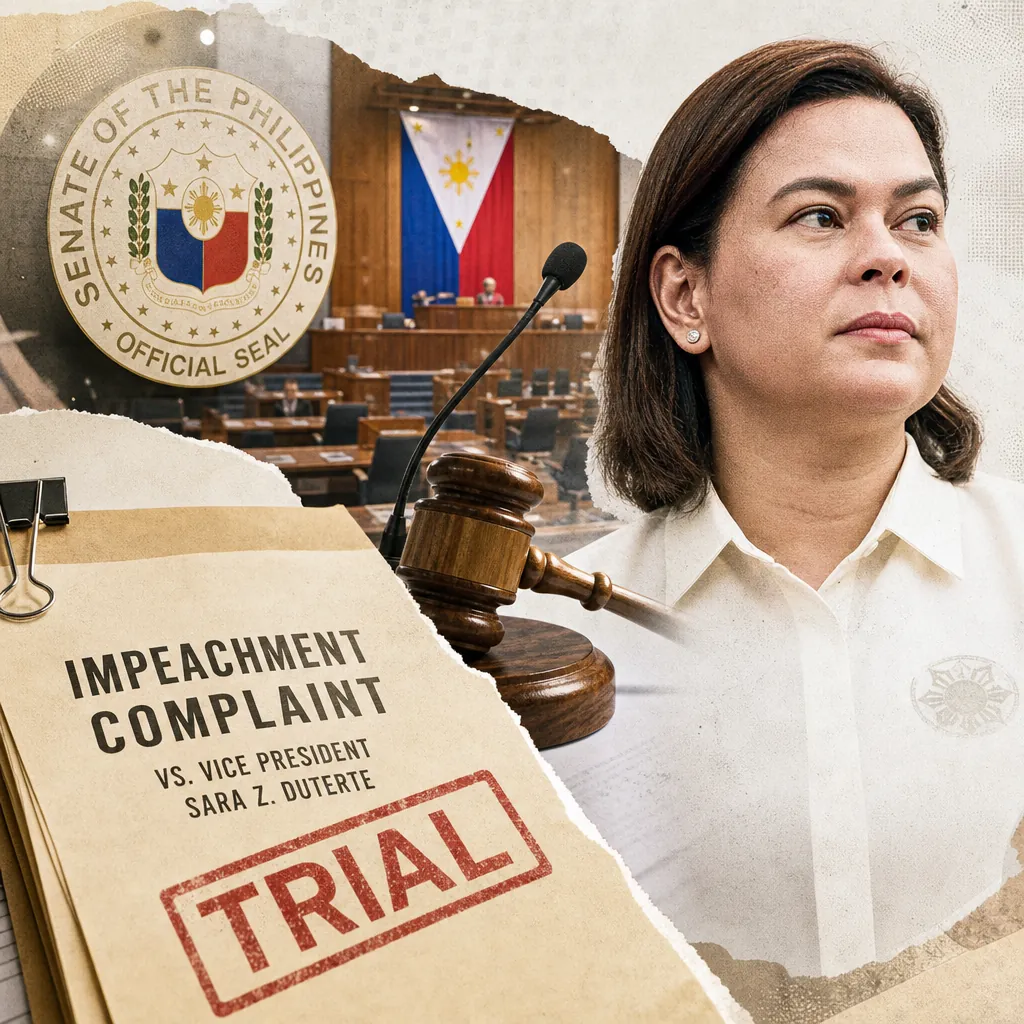
- Impeachment trial procedural battles and public skepticism – The impeachment trial of Vice President Sara Duterte continued to dominate political conversation, with the defense invoking an alleged "Operation Romanov" plot against the Duterte family—a claim dismissed by Malacañang as unsubstantiated. Public engagement was marked by high "haha" reactions on posts about procedural missteps, such as Senator Jinggoy Estrada's botched motion to attend the trial, which drew 5,789 "haha" reactions on GMA News's Facebook post.
- Corruption narratives expanding beyond the trial – A flood control scandal involving DPWH projects funded by PhilHealth and PDIC reserves generated strong public anger, with one ABS-CBN News post on contractor Sarah Discaya's bail receiving 1,201 angry reactions and 729 "haha" reactions. Representative Leandro Leviste's statement that DPWH—not Congress—selected the ₱153-billion projects shifted accountability to former Secretary Manuel Bonoan, adding a new layer to anti-corruption discourse.
- School safety and infrastructure vulnerabilities – The Department of Education reported 12 school violence incidents since the June 22 Tacloban shooting, and less than half of public schools have CCTVs and guards. A chemical leak at Baybay City Senior High School hospitalized four students, while bomb scares in Pampanga prompted PNP investigations. DepEd's plan to hire 10,000 School Counselor Associates by September and the launch of active shooter drills (postponed due to rains) signal ongoing efforts to address security gaps.
- Economic pressures amid crises – Meralco power rates increased by ₱0.3428 per kWh to ₱14.8261 per kWh in July, driven by higher generation charges due to the Malampaya shutdown and fuel costs. Senator Risa Hontiveros called for a disconnection freeze for consumers contesting erroneous meter readings. The LPG excise tax resumption added to cost-of-living concerns, while the World Bank's reclassification of the Philippines as an upper-middle-income economy was met with skepticism from labor groups.
- Maritime security and South China Sea anniversary – The 10th anniversary of the 2016 Arbitral Award on July 12 prompted diplomatic statements. DFA Secretary Ma. Theresa Lazaro declared the award "not subject to negotiation or compromise," while the US reaffirmed maritime security cooperation. A mural festival across 220 locations nationwide highlighted the West Philippine Sea issue, though public engagement on social media remained low.
How the narratives stack
Dominant – Within the captured set, the multi-hazard disaster response narrative generated the highest engagement, particularly the earthquake coverage and class suspension announcements. The MMDA's post on Metro Manila class suspensions achieved 1,971 likes and 490 shares, while GMA News's earthquake post drew 2,547 sad reactions. This indicates that practical, life-impacting information drives the most significant public response.
Counter-narrative – The impeachment trial's procedural comedy—Estrada's filing error, Ligutan's abandoned redirect—generated widespread mockery, with "haha" reactions dominating engagement. This trivialization of the trial risks eroding public seriousness about the proceedings, though it also reflects deep political polarization.
Emerging – The flood control scandal involving PhilHealth and PDIC funds is gaining traction as a corruption narrative separate from the impeachment trial. Representative Leviste's clarification that DPWH selected the projects, not Congress, has shifted blame to the executive branch, potentially threatening the administration's "Build Better More" agenda.
Suppressed – Economic stories such as rising power bills and the DA's mechanical dryer target received near-zero engagement, suggesting that routine policy updates are being drowned out by crisis and political coverage. This silence could erupt during budget hearings or after a tipping point.
Platform insights
- Facebook – Dominated as the primary platform for official announcements and emotional expression. The MMDA's class suspension post achieved the highest shares (490) and love reactions (250), while earthquake coverage drew overwhelming sad reactions. Local government pages and regional news outlets drove localized content, with Cebu-based pages like SunStar Cebu and CDN Digital amplifying ashfall advisories. The platform also hosted the most polarized impeachment content, with high "haha" reactions on procedural missteps.
- Twitter – Served as a rapid-dissemination channel for agency alerts and breaking news, but engagement was lower. PAGASA and PHIVOLCS updates, Cebu Pacific flight cancellations (7,505 views), and diplomatic statements on the South China Sea award received moderate views but minimal likes or retweets. Twitter functioned more as a real-time briefing feed than a conversational space.
- YouTube – Limited new Philippine-relevant content appeared, but existing impeachment trial videos (86,000 views) and GMA News's "Unang Balita" segments provided recap and analysis. The platform remains a secondary channel for long-form coverage.
Key voices and communities
- Government disaster response agencies – PAGASA, PHIVOLCS, MMDA, and local DRRM offices are the backbone of official communications, providing technical updates and class suspension lists. Their posts generate high engagement when they offer actionable information, as seen with the MMDA's class suspension list.
- Mainstream news media – GMA News, ABS-CBN News, Philippine Star, Manila Bulletin, and Inquirer.net dominate reach and set the news agenda. Their coverage of the earthquake, impeachment trial, and flood control scandal shapes public perception. GMA News's earthquake post drew the highest emotional engagement, while ABS-CBN News's coverage of the Discaya bail generated the most angry reactions.
- Local government units and regional media – Provincial and city governments, along with regional outlets like SunStar Cebu, CDN Digital, and Bombo Radyo stations, provide hyper-local, action-oriented content. Their class suspension announcements and ashfall advisories are widely shared and trusted by local audiences.
- Political commentators and legal experts – Figures like former presidential spokesperson Harry Roque, legal analyst Atty. Domingo Cayosa, and retired Supreme Court Justice Adolfo Azcuna provide interpretive frameworks for the impeachment trial. Their analysis influences how politically engaged audiences understand procedural developments.
- Anti-corruption and civil society groups – Organizations like Digital Pinoys and the United People's Initiative are mobilizing around the flood control scandal and planned anti-corruption rally at Liwasang Bonifacio. Their content generates moderate engagement but signals growing grassroots pressure.
Narrative streams
Multi-hazard disaster response: Typhoon, volcano, and earthquake
The convergence of Typhoon Inday, Kanlaon eruption, and a magnitude 4.9 earthquake off Eastern Samar created a compound crisis that tested government coordination. PAGASA's Heavy Rainfall Warning No. 1-A for Metro Manila and extended forecasts for Romblon through July 12 reinforced the agency's role as the primary source of technical updates. The MMDA's consolidated class suspension list for Metro Manila on July 10 became a crucial public service bulletin, with 1,971 likes and 490 shares, demonstrating that citizens rely on a single authoritative source to coordinate personal decisions like work and school attendance.
The Kanlaon eruption at 7:33 AM on July 9 triggered immediate local government action across Cebu and Negros. Within eight hours, at least 22 LGUs had announced class suspensions and distributed masks, with the Cebu Provincial Health Office activating hospital alerts and procuring ₱2.2 million worth of N95 masks. The Environmental Management Bureau (EMB) Central Visayas posted reassuring air quality data, stating PM2.5 levels in Talisay City were "Fair" (AQI 57) and Toledo City remained "Good" (AQI 12 and 23), though it warned against complacency.
The earthquake off Balangiga generated the strongest emotional response of any single event, with GMA News's post accumulating 2,547 sad reactions and 351 care reactions. This suggests that sudden seismic events trigger disproportionate anxiety compared to slower-developing weather systems—a finding that should inform how government agencies frame public advisories during multi-hazard scenarios.
Impeachment trial: Procedural drama and political polarization
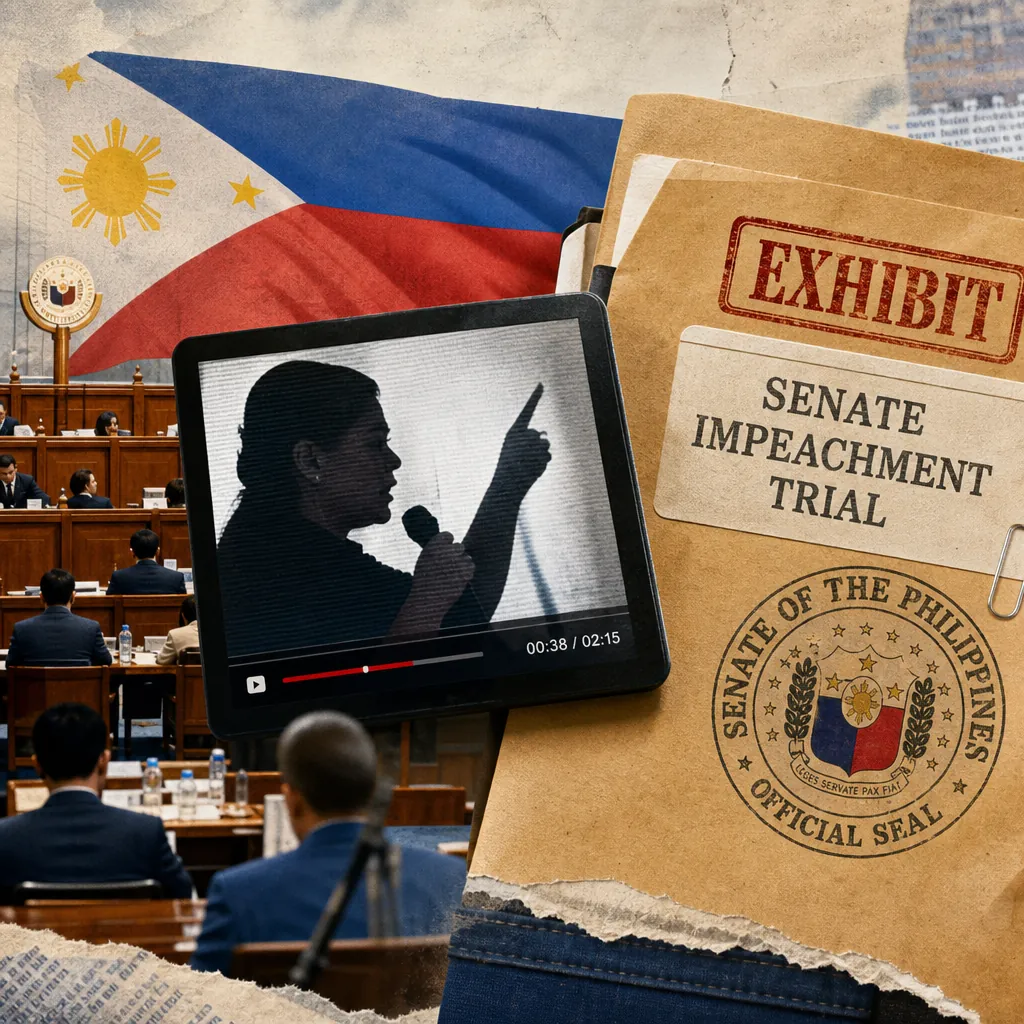
The impeachment trial of Vice President Sara Duterte continued to dominate political conversation, with the defense invoking an alleged "Operation Romanov" plot against the Duterte family as justification for VP Sara's November 2024 threat statements. Malacañang dismissed the plot as unsubstantiated, with Communications Undersecretary Claire Castro stating the threats were "neither hypothetical nor conditional." Retired Supreme Court Justice Adolfo Azcuna affirmed that the prosecution established criminal intent based on the NBI agent's assessment.
Procedural missteps became a dominant narrative thread. Senator Jinggoy Estrada's camp mistakenly filed a motion to attend the trial with the wrong Sandiganbayan division, drawing 5,789 "haha" reactions on GMA News's Facebook post—the highest emotional response across all posts for the day. Defense lawyer Atty. Amando Ligutan promised a redirect after claiming cross-examination was an "utter failure" but then failed to follow through, a gaffe that commentator @butch.baliao described as a "PR stunt cosplaying as courtroom argument."
The prosecution's argument that impeachment does not require the criminal standard of proof beyond reasonable doubt drew 357 "haha" reactions on a post from @funnydiscoveriesnews, indicating public skepticism toward shifting evidentiary standards. House prosecutors signaled they would present "stronger evidence" next week, including subpoenas for bank and tax records tied to VP Duterte and her husband.
Flood control scandal and anti-corruption momentum
A flood control scandal involving DPWH projects funded by PhilHealth and PDIC reserves emerged as a significant corruption narrative. Representative Leandro Leviste stated that DPWH—not Congress—selected the ₱153-billion projects, pointing to former Secretary Manuel Bonoan for answers. The post on archlightnews accumulated 321 likes and 27 shares. Contractor Sarah Discaya's bail in the Davao Occidental case generated 1,201 angry reactions and 729 "haha" reactions on ABS-CBN News, reflecting widespread frustration and cynicism.
The Romualdez camp denied any connection to the scandal, with spokesperson Atty. Ade Fajardo arguing that no evidence has been produced against the former House Speaker. The United People's Initiative scheduled an anti-corruption rally at Liwasang Bonifacio on July 10, with 2,000 police officers deployed to maintain order.
School safety and infrastructure vulnerabilities
The Department of Education reported 12 school violence incidents since the June 22 Tacloban shooting, and less than half of public schools have CCTVs and guards. A 16-year-old student in South Cotabato was caught carrying a handgun on July 7. A chemical leak at Baybay City Senior High School hospitalized four students on July 9, while bomb scares in Pampanga prompted PNP investigations.
DepEd's plan to hire 10,000 School Counselor Associates by September and the launch of active shooter drills (postponed due to rains) signal ongoing efforts to address security gaps. The Senate is pushing a school safety bill, while DepEd and DBM are processing the counselor hires. However, the postponement of the National Safe Schools Summit due to Typhoon Inday highlights how disaster response continues to compete with other priorities.
Economic pressures: Power rates and cost of living
Meralco power rates increased by ₱0.3428 per kWh to ₱14.8261 per kWh in July, driven by higher generation charges due to the Malampaya shutdown and fuel costs. For a household consuming 200 kWh, the adjustment means paying about ₱69 more this month. Senator Risa Hontiveros called for a disconnection freeze for consumers contesting erroneous meter readings, citing a case where a household was billed despite having circuit breakers switched off while on vacation.
The LPG excise tax resumption added to cost-of-living concerns, with prices increasing by ₱3 per kilo. The World Bank's reclassification of the Philippines as an upper-middle-income economy was met with skepticism from labor groups like Anakpawis Party-list and IBON Foundation, who argued it does not reflect broad-based progress.
South China Sea arbitral award anniversary
The 10th anniversary of the 2016 Arbitral Award on July 12 prompted diplomatic statements. DFA Secretary Ma. Theresa Lazaro declared the award "not subject to negotiation or compromise," likening it to a "lighthouse" guiding nations amid rising geopolitical tensions. The US reaffirmed maritime security cooperation, while Manila's lawyer assessed that Beijing's actions are diluting the award's practical impact.
A mural festival across 220 locations nationwide highlighted the West Philippine Sea issue, with 100 winning murals advancing to compete for a ₱1 million grand prize. However, public engagement on social media remained low, with the US commitment post receiving only 5 likes and 292 views.
Conversation trajectory
- Multi-hazard crisis narrative intensification – The convergence of Typhoon Inday, Kanlaon eruption, and earthquakes will shift public focus from preparedness to post-event critique of government coordination within 3–5 days. The earthquake's high emotional engagement (2,547 sad reactions) suggests latent public fear that could turn into blame if aftershocks cause damage or if response is perceived as slow. Typhoon Inday's landfall on July 10 will test infrastructure resilience and may reveal network vulnerabilities for telecom providers.
- Impeachment trial procedural battles to continue – The subpoena of OVP Chief of Staff Zuleika Lopez for next week's testimony and the prosecution's promised "pasabog" (bombshell) evidence will re-energize the conversation. The defense's "Operation Romanov" narrative will likely intensify as a credibility wedge, while the Supreme Court petition to halt the trial introduces a new legal dimension. Public trust in the trial remains low, with only 19% of Filipinos confident senators will decide based on evidence.
- Flood control scandal escalation – The Leviste testimony and Discaya bail have generated real-time anger (over 1,200 angry reactions). The planned anti-corruption rally on July 10 and potential congressional inquiries will keep the scandal in the spotlight. Any new COA report on confidential funds could amplify the corruption penalty debate triggered by China's execution of a former official for bribery.
- School safety as a persistent concern – The DepEd's counselor hiring and active shooter drills will be closely watched, but the postponement of the summit due to rains may delay momentum. The chemical leak in Baybay City and bomb scares in Pampanga add to a sense of systemic vulnerability that could fuel demands for faster action.
Key trigger events: Typhoon Inday's exit from PAR (expected July 11), the July 12 South China Sea arbitral award anniversary, the resumption of the impeachment trial on July 13 with Zuleika Lopez's testimony, and the Sandiganbayan's ruling on Estrada's furlough request.
Response guidance
Platform-specific approaches:
- Facebook – Amplify official safety advisories from PAGASA, PHIVOLCS, and LGUs using visual infographics and clear step-by-step instructions. Create a dedicated, pinned post consolidating real-time class suspension announcements from multiple LGUs. Respond to high-engagement comments with empathetic, factual replies that redirect to official sources. Deploy short video updates from trusted local officials explaining the rationale behind class suspensions.
- Twitter – Use brief, scannable threads to relay real-time updates on typhoon, earthquake, and volcanic activity with consistent hashtags like #IndayPH, #KanlaonAshfall, and #EarthquakePH. Engage with official accounts of Senate, House prosecution, and Malacañang to amplify clear procedural updates on the impeachment trial. Flag and counter misinformation about evidence authenticity by linking to official Senate statements.
- YouTube – Produce short explainer videos (2–5 minutes) featuring subject-matter experts on disaster preparedness and trial procedures. Host live-streamed press conferences during crisis events and pin comments with time-stamped key takeaways.
Key messages:
- "All government agencies—PAGASA, PHIVOLCS, DOH, and local DRRMOs—are on heightened alert and coordinating responses to Typhoon Inday, the Kanlaon eruption, and the Eastern Samar earthquake. Rely only on official sources for updates."
- "The impeachment trial is a constitutional process centered on specific allegations under Article IV regarding grave threats. Evidence is being subjected to rigorous authentication standards."
- "School safety remains a top priority: DepEd is rapidly hiring 10,000 counselor associates, deploying security upgrades, and coordinating with the PNP to prevent violence."
- "Infrastructure projects like flood control dredging and road improvements are moving forward under the 'Build Better More' agenda, with measurable outcomes and continuous oversight."
Sensitive topics to navigate:
- Political framing during disasters – Avoid any messaging that could be seen as using the disaster for political gain. Stick strictly to factual safety advisories and avoid referencing political figures unless quoting official directives.
- Public anxiety over simultaneous hazards – Address genuine fear and helplessness with clear, empathic language that provides concrete steps, not just reassurances.
- Flood control project accountability – Any response must acknowledge the need for transparency and affirm that COA and congressional oversight continue. Avoid defending or attacking any specific individual—focus on the process.
- School violence and student safety – Responses must avoid panic while demonstrating concrete action. Emphasize the DepEd-PNP partnership, the 10,000-counselor hiring drive, and ongoing security assessments.
Response priorities:
- Establish a single, authoritative digital hub for real-time disaster updates – Compile all PAGASA, PHIVOLCS, DOH, NDRRMC, and LGU announcements into a unified government emergency page to reduce conflicting information.
- Prepare a rapid-response template for digital evidence integrity – Given public attention on AI and video authentication raised by Senator Lacson, telecom and banking clients should be ready to demonstrate their own forensic verification processes for any disputed digital records.
- Monitor and address the "Operation Romanov" counter-narrative – Focus on the lack of substantiation and redirect attention to actual evidence presented in trial, rather than engaging with unsubstantiated conspiracy claims.
- Amplify positive economic and social programs – Boost soft-power initiatives like the DepEd-DA School-Based Feeding Program, the DA's mechanical dryer expansion, and the DOH's Doctors to the Barrios deployment to offset negative coverage of power bill increases and LPG tax restoration.
Want this kind of intelligence on your brand?
This brief is built on the same MediaWatch methodology that runs continuously across every brand we monitor. See your competitive landscape, Impact Score, and narrative trajectory in a 30-minute demo.