Philippine banks race to zero on transfer fees as consumer celebration meets margin-compression warnings
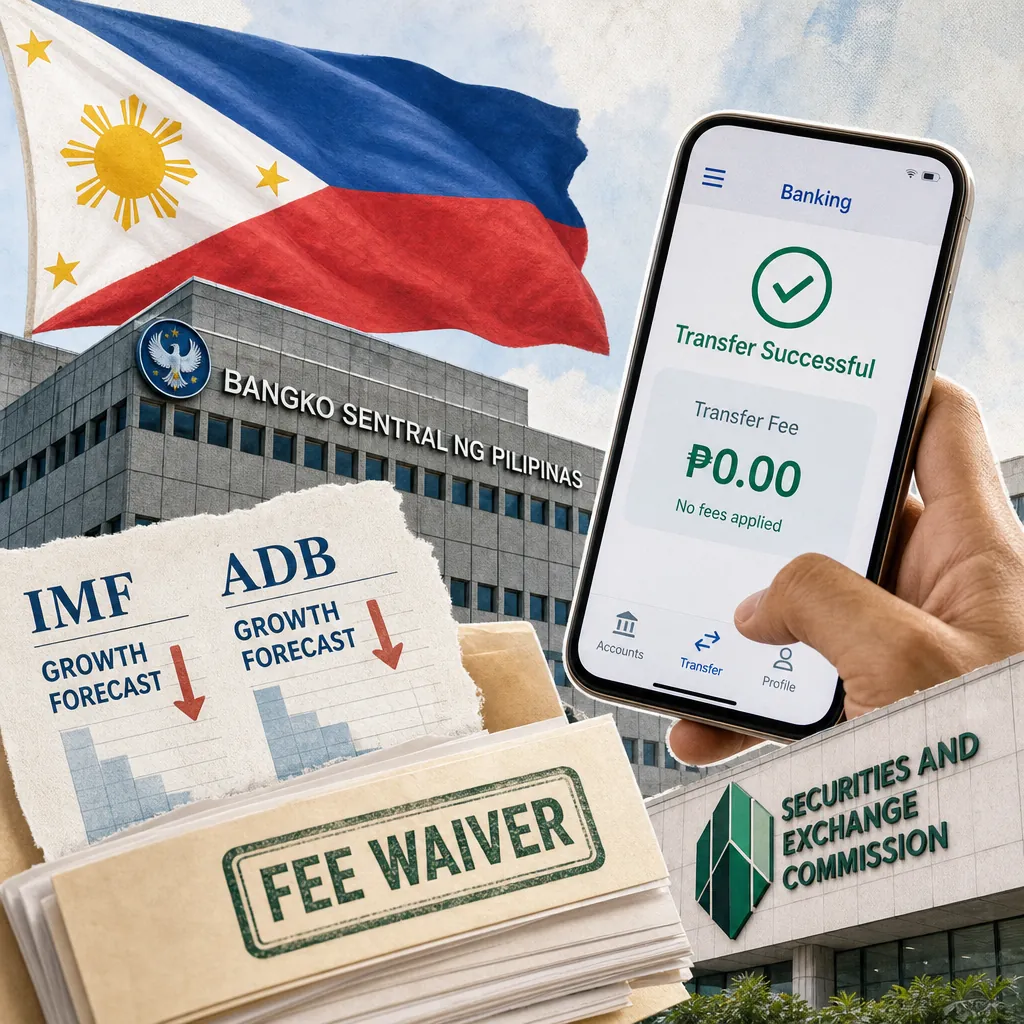
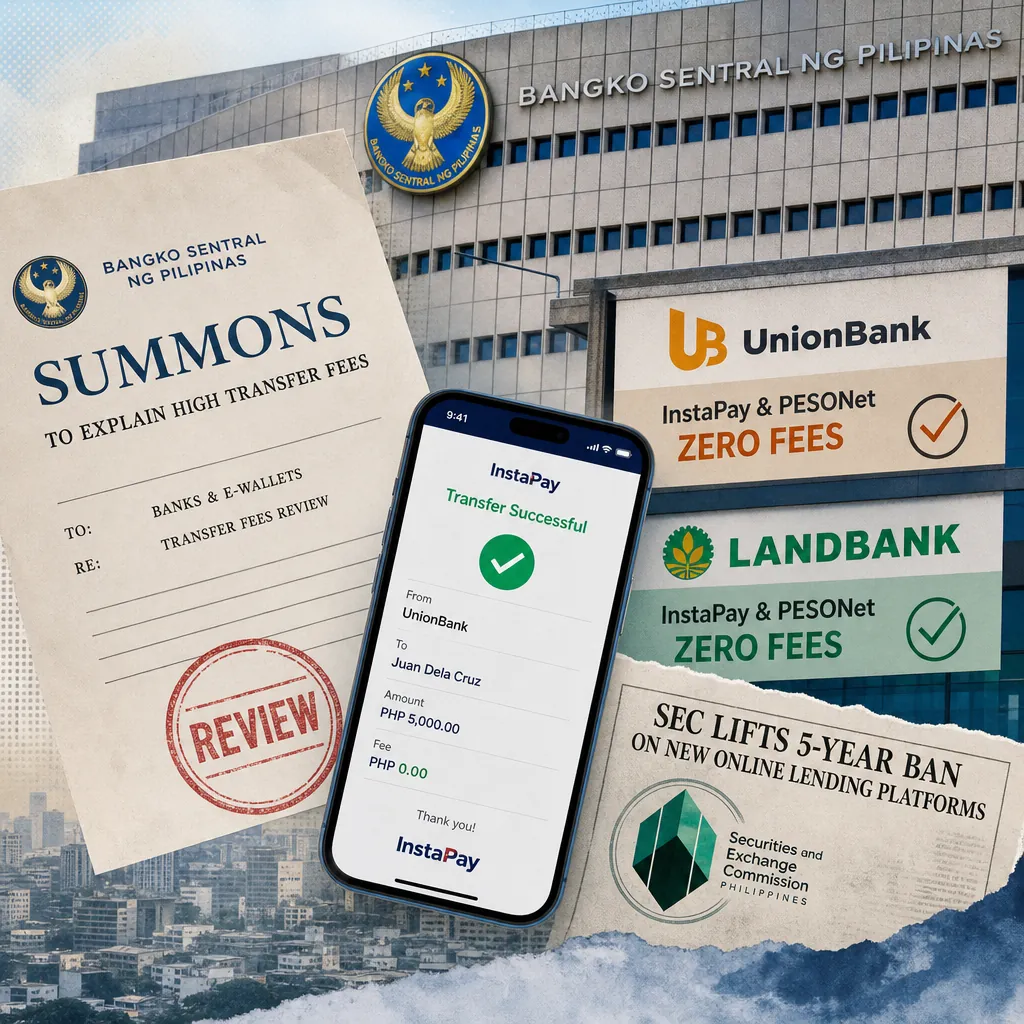
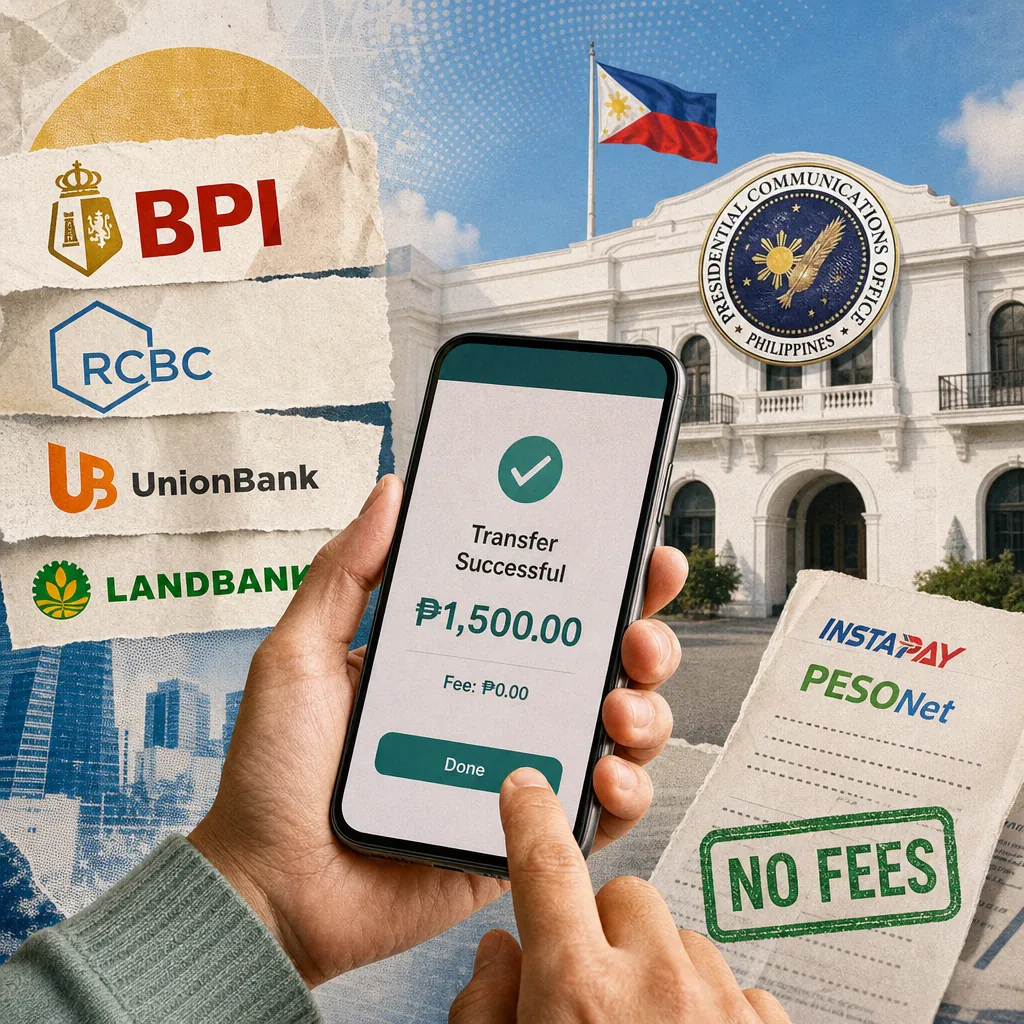
On July 9, 2026, a cascade of major Philippine banks—BDO, Metrobank, Chinabank, Security Bank, EastWest, and PSBank—announced the waiver of InstaPay and PESONet transfer fees, triggering an overwhelmingly positive public response on social media while business outlets warned of a 'margin-compressing race to zero.' The Bangko Sentral ng Pilipinas' regulatory push is credited as the driving force, creating both reputational opportunities and strategic challenges for the sector.
The conversation unfolded rapidly on Thursday, July 9, 2026, beginning with ==gmanews== posting the announcement at what appears to be the earliest timestamp, stating that BDO Unibank had made InstaPay and PESONet transfers free on BDO Online and BDO Pay. Within hours, other major outlets amplified the news. ==techpilipinas== framed the move explicitly as a consequence of new BSP regulations requiring =="fairer, cost-based pricing for digital transfers,"== noting that BDO was joining BPI, LandBank, Metrobank, and PSBank in dropping charges. This regulatory angle quickly became the central narrative for how the story was understood by the public. By mid-day, ==bilyonaryo_ph== tweeted that it was =="a major win for retail banking clients,"== adding a competitive and consumer-oriented lens that resonated widely. The initial burst of posts on Facebook saw an overwhelmingly positive reception, with the ==gmanews== post alone accumulating 2,982 likes, 5,553 loves, and 2,140 shares, while the ==news5everywhere== post in Filipino drew 671 likes and 601 loves. Only a single sad and angry reaction each appeared across all Facebook posts, indicating near-unanimous approval. No subsequent posts challenged the announcement, so the conversation remained celebratory and informational through the rest of the day.
The conversation around free InstaPay and PESONet transfers unfolded rapidly on July 9, 2026, beginning with EastWest Bank's announcement that fees would be waived starting July 15 for customers maintaining a minimum average daily balance of P2,000. That post quickly gained traction, accumulating 205 likes, 966 shares, and 638 love reactions, signaling strong consumer approval for the move. Shortly afterward, Metrobank and its thrift arm PSBank declared they were making all InstaPay and PESONet transfers free immediately, citing compliance with the Anti-Financial Account Scamming Act (AFASA) and BSP Circular No. 1213. The Metrobank post drew a smaller but enthusiastic response with 56 likes and 102 shares, while the news outlet ==@news5everywhere== amplified the announcement, earning 261 likes, 166 love reactions, and 85 comments. This triggered a cascade of media coverage: ==@bworldph==, ==@rapplerdotcom==, ==@inquirerdotnet==, and ==@abscbnnews== all published updates, with ==@abscbnnews=='s tweet reaching 11,184 views.
The narrative then expanded as CIMB Bank posted a cheeky reaction: =="Looks like free transfers are finally having a moment. 👀 We're glad to see it."== CIMB highlighted its existing free transfer benefits (2x free InstaPay daily, 10x for Prime/Biz accounts), positioning itself as an early mover and drawing playful reactions—6 haha reactions stood out among its 14 likes. By the end of the day, the conversation shifted to consolidation: media analyst ==@tonyocruz== posted a detailed cheat sheet listing which banks offered free unlimited InstaPay and PESONet as of July 9, providing a valuable reference that helped consumers navigate the rapidly changing landscape.
The conversation ignited early in the day when ==chinabank.ph== posted that transfers via the My CBC app were now free, with previous fees of P5 for InstaPay and P20 for PESONet completely eliminated. This initial announcement quickly gained traction, accumulating 368 likes and 1,594 shares as customers expressed surprise and delight. The real turning point came when ==spotdotph== posted a comprehensive list confirming that both BDO and Metrobank had joined the movement, writing =="Two of the biggest banks in the Philippines, BDO and Metrobank, have finally waived both InstaPay and PESONet fees as of today."== This post exploded with 4,747 likes and 5,800 love reactions, signaling an overwhelmingly positive public response to what consumers had long demanded. By mid-afternoon, ==abscbnnews== amplified the momentum with their coverage of BDO's announcement, which garnered an extraordinary 12,589 love reactions and 1,593 comments, making it the most emotionally resonant post of the day.
Key themes
- Consumer elation and long-awaited victory — The dominant emotional thread emerged immediately as users celebrated what they perceived as a major win against banking fees. On Reddit, ==u/orcroxar== captured the sentiment perfectly: =="Finally, nakahanap na ng way si BDO! 😁 It's good to see that majority of our local banks are now doing this regarding free money transfers, hopefully magtuloy-tuloy!"== This post received 169 upvotes and sparked a discussion about how long consumers had been waiting for this change. The conversation quickly built upon itself as each new bank announcement was met with renewed enthusiasm. ==unboxph== posted a brief but telling reaction: =="Ayan na guys! Zero fees na FINALLY sa BDO!!!"== which encapsulated the collective relief felt by digital banking users. The sheer volume of love reactions across all major news outlets—12,589 on ABS-CBN's BDO post alone—indicated that this was not merely a practical benefit but an emotional milestone for Filipino consumers who had long viewed transfer fees as an unfair burden.
- The competitive race among banks — As the day progressed, a clear narrative of competitive one-upmanship emerged, with banks seemingly racing to announce their own fee waivers. ==abscbnnews== drove this narrative by sequentially reporting on Security Bank's announcement (1,167 likes, 1,697 love reactions) and EastWest Bank's commitment to zero fees starting July 15 (848 likes, 805 love reactions). The pattern became unmistakable: each new announcement built upon the previous one, creating a cascade effect. ==manilabulletinbusiness== framed this strategically, describing it as =="a margin-compressing race to zero among the country's retail banks."== ==rapplerdotcom== provided crucial context by linking the movement directly to BSP pressure, noting that more banks were expected to follow in response to the central bank's push. This competitive dynamic meant that banks that hesitated—like PNB, whose waived fees were announced to take effect only on July 10—were positioned as laggards in the public conversation.
- Regulatory compliance as the primary driver — The narrative first emerged from ==techpilipinas==, which explicitly tied BDO's fee waiver to the Bangko Sentral ng Pilipinas' recent rules requiring =="fairer, cost-based pricing."== This thread positioned the move not as a voluntary customer benefit but as a necessary adjustment to regulation, subtly shifting credit from the bank to the central bank. As other outlets like ==gmanews== and ==inquirerbiz== reported the news, they did not initially mention the BSP rule, but the regulatory context was quickly reinforced by ==techpilipinas== and later picked up in business commentary. By the afternoon, the narrative had evolved to frame BDO's compliance as completing an industry-wide shift, with the implication that remaining holdouts would soon follow.
- Strategic implications for digital banking — A more analytical thread emerged later in the day, driven by business publications examining the long-term consequences. ==manilabulletinbusiness== explicitly warned about margin compression, a concern that resonated with industry watchers but was largely ignored by celebrating consumers. The conversation on Reddit took a more measured tone, with ==u/DonDae01== posting a detailed breakdown of Chinabank's move, noting that the bank, =="known as the oldest commercial bank in the Philippines, continues to modernize its banking services by offering customers a more seamless and cost-efficient way to transfer funds."== This framing highlighted the strategic necessity for traditional banks to compete with digital-first players like GCash and Maya, which already offered free transfers. The subtext was clear: fee waivers were not altruism but survival in an increasingly competitive digital payments landscape.
- Security features gaining parallel traction — Metrobank's introduction of Cooling-Off Period, Money Lock, Geolocation, and Payee Verification under AFASA and BSP Circular 1213 marked a second key narrative stream. While engagement was more moderate (56 likes, 102 shares), the compliance angle will likely drive coverage in business and regulatory outlets as a benchmark for other banks. This is particularly relevant for the financial consumer protection agenda and for banks' upcoming security roadmap communications.
- Consumer distrust persists despite fee waivers — A survey by Havas Ortega Group released on the same day found that 70% of Filipinos distrust banks, believing they prioritize their own interests over customers, and 72% see no significant difference between banks. This backdrop suggests that while fee waivers generate goodwill, they may not be sufficient to overcome deep-seated skepticism. The survey also found that 64% feel uncomfortable using online banking apps, even as 91% say they manage their finances well and 98% express interest in investment opportunities. This tension between aspiration and trust underscores the need for banks to pair fee reductions with transparency and education.
- Consumer watchdog warns of unfair advantage for big banks — The consumer watchdog Pinoy Aksyon warned that the BSP's push for zero transfer fees unfairly favors large financial institutions and disadvantages new players, contradicting the goal of financial inclusivity. The group argued that online fund transfer platforms are essential tools for financial inclusion, and that eliminating fees could stifle competition from smaller, innovative players. This counter-narrative, while not dominant in the day's conversation, introduces a regulatory and competitive tension that could gain traction as the policy's implications become clearer.
How the narratives stack
Dominant — Within the captured set, the dominant narrative is unequivocally the consumer celebration of free transfers. The emotional engagement—dominated by love reactions rather than simple likes—signals that fee waivers generate substantial goodwill. The cascade of announcements from BDO, Metrobank, Chinabank, Security Bank, EastWest, and PSBank created a sense of inevitability and momentum, with each new announcement reinforcing the perception that zero-fee transfers are the new industry standard. The regulatory framing, while present, is secondary to the consumer victory narrative in terms of public resonance.
Counter-narrative — The margin-compression warning from business outlets like Manila Bulletin and the consumer watchdog's critique from Pinoy Aksyon represent the primary counter-narrative. These voices argue that the race to zero could undermine bank profitability, reduce service quality, and unfairly disadvantage smaller players. However, this narrative received far less engagement than the consumer celebration and was largely confined to business-focused outlets and Twitter discussions. The tension between consumer sentiment and strategic sustainability is a critical undercurrent that communications teams must manage.
Emerging — The security features narrative, led by Metrobank's AFASA-compliant announcements, is an emerging stream that could gain prominence as consumers begin to question whether free transfers come with reduced fraud protection. The Havas survey on consumer distrust also points to an emerging need for banks to differentiate beyond price. Additionally, the competitive jousting among banks—with CIMB's cheeky post and the cheat sheet from ==@tonyocruz==—suggests that comparison shopping and brand differentiation will become more important as the initial euphoria fades.
Suppressed — The story that is notably under-covered in the captured set is the potential impact on digital wallets like GCash and Maya. While these platforms historically charged lower or zero fees, the universal bank fee waivers erode their competitive advantage. The hashtag #GCashDown from story keywords suggests recurring outages could be leveraged by banks promoting reliability, but this angle was not explicitly developed in the day's conversation. Also suppressed is the question of how banks will maintain service quality and cybersecurity investments when fee revenue disappears—a concern that business outlets have raised but that has not yet entered the mainstream consumer conversation.
Platform insights
- Facebook — Facebook emerged as the primary arena for consumer celebration and news dissemination, with major posts from ==abscbnnews==, ==spotdotph==, ==gmanews==, and ==chinabank.ph== driving the conversation. The platform's emotional reaction buttons provided a clear signal of public sentiment, with love reactions consistently outnumbering likes on positive announcements, reaching 12,589 on the ABS-CBN BDO post alone. The high share counts (3,984 for ABS-CBN's BDO post) indicated that users were actively spreading the news to personal networks, amplifying reach organically. The near-zero negative reactions (only one sad and one angry across thousands of interactions) indicate that the news was accepted without controversy. The multimedia advisory format and Filipino-language coverage helped reach a broad audience.
- Twitter (X) — Twitter functioned as the real-time news wire, with outlets like ==rapplerdotcom==, ==gmanews==, and ==inquirerbiz== providing rapid-fire updates that created a sense of momentum and urgency. The platform's brevity suited the announcement-heavy nature of the day, though engagement metrics were notably lower than Facebook, with even the most popular tweets reaching only hundreds of views and single-digit likes. The BSP angle was more prominently discussed here, with ==rapplerdotcom== explicitly connecting the fee waivers to central bank policy. The ==gmanews== tweet had 10,189 views but only one like, suggesting that Twitter users consumed the news passively without amplifying it. The platform's role was more about adding nuance than driving viral sentiment.
- Reddit — Reddit provided the most nuanced and critical discussion, with the two main threads—from ==u/orcroxar== on BDO and ==u/DonDae01== on Chinabank—attracting 169 and 47 upvotes respectively. The platform's longer-form format allowed for more thoughtful analysis, with commenters debating whether fee waivers would actually lead to better banking outcomes or simply squeeze bank margins. This platform uniquely hosted the tension between consumer celebration and strategic concern. The subreddits r/Philippines and r/phinvest were the likely venues, though the data does not specify.
- Cross-platform consolidation — The cheat sheet posted by ==@tonyocruz== on Facebook and the repeated "updates" from ==@rapplerdotcom== showed a natural progression from individual announcements to aggregated intelligence, helping consumers and analysts track which banks had waived fees and which had not. This pattern of consolidation is typical of fast-moving, multi-actor stories and suggests that consumers value comparison tools that simplify decision-making.
Key voices and communities
- Major bank official accounts — The largest universal banks—BDO, Metrobank, Chinabank, Security Bank, EastWest, and PSBank—all publicly announced fee waivers on their official Facebook pages and via news releases on July 9, 2026. These institutional accounts generate extremely high engagement: BDO's announcement on ABS-CBN News received over 6,200 likes and 12,500 love reactions, while spotdotph's roundup of BDO and Metrobank garnered 4,747 likes and 5,800 love reactions. The messaging is uniform: position the waiver as a customer-centric move to reduce friction in digital payments. Each bank frames the fee elimination as a competitive necessity driven by BSP's push for lower digital transaction costs, with some explicitly linking to a "margin-compressing race to zero." The tone is promotional but also defensive, as banks signal alignment with financial inclusion goals.
- Mainstream news media and news aggregators — Major Philippine news organizations—ABS-CBN News, GMA News, Rappler, BusinessWorld, Manila Bulletin, and ANC Alerts—dominated the breaking news coverage, amplifying bank announcements to broad audiences. These outlets typically post once per bank, but their combined reach is massive: ABS-CBN's single BDO post received 1,593 comments, while GMA's Security Bank tweet had 7,557 views on Twitter alone. They act as impartial catalysts, neither endorsing nor criticizing the fee waivers, but their framing often foregrounds the competitive dynamic. Media outlets treat the story as a developing market trend, emphasizing the "free" aspect and the list of banks already onboard, often with live-update formats (e.g., "(4th UPDATE)" from Rappler). BusinessWorld provided the most detailed fee history (e.g., ChinaBank's previous P5 InstaPay, P20 PESONet), giving readers a clear cost baseline.
- Consumer advocates, personal finance influencers, and public commentators — Individual users on Reddit, Facebook comment sections, and personal finance pages (e.g., ==unboxph==, ==fingrowthph==, ==TechPilipinas==) shape the perceived value of the fee waivers through personal enthusiasm and analysis. Reddit posts by users like ==u/orcroxar== and ==u/DonDae01== generated 169 and 47 upvotes respectively, with comments expressing relief and hope that "majority of our local banks are now doing this." These voices are not coordinated but collectively amplify the expectation that all banks should follow. The tech-focused page TechPilipinas posted a detailed article on Chinabank's waiver, noting the lack of minimum amount or cap—a detail that resonated with power users. Facebook comment threads under bank posts contain thousands of largely positive reactions, though a few angry reactions (2 on spotdotph) hint at lingering skepticism about hidden conditions.
- BSP and industry body references — While the Bangko Sentral ng Pilipinas did not post directly in this dataset, it is frequently cited as the regulatory catalyst. Rappler explicitly stated the fee waivers are "in response to the latest push by the Bangko Sentral ng Pilipinas." ChinaBank's official post reminds customers that "Chinabank is regulated by the Bangko Sentral ng Pilipinas," reinforcing the regulatory endorsement. BSP's influence is indirect but essential, framing the fee race as a policy-driven rather than purely competitive move. The "margin-compressing race to zero" described by Manila Bulletin positions BSP as the orchestrator of a deliberate shakeout. No direct BSP quotes appear, but the repeated mention of BSP circulars and the regulatory framework in bank posts legitimizes the fee waivers as part of a broader national agenda.
- Consumer watchdog Pinoy Aksyon — The consumer watchdog and think tank Pinoy Aksyon introduced a critical counter-narrative, warning that the BSP's zero transfer fees policy unfairly favors large financial institutions and disadvantages new players. Convenor Bencyrus Ellorin argued that the move is "unfair at disadvantageous sa new players at taliwas ito sa financial inclusivity na isinusulong ng gobyerno" (unfair and disadvantageous to new players and contrary to the financial inclusivity promoted by the government). This voice, while not dominant in the day's conversation, represents a regulatory and competitive tension that could gain traction as the policy's implications become clearer.
Narrative streams
The cascade of fee waivers: a day of competitive one-upmanship
The defining feature of July 9, 2026, was the rapid, sequential announcement of fee waivers by major Philippine banks, creating a cascade effect that left no major player untouched by day's end. The sequence began with EastWest Bank's conditional waiver (effective July 15, requiring a P2,000 minimum average daily balance), followed by Metrobank and PSBank's immediate, unconditional waivers. BDO, the country's largest bank by assets, then announced its own waiver, which drew the most significant public response—over 12,000 love reactions on ABS-CBN's coverage alone. Security Bank followed with a July 10 effective date, and Chinabank had already implemented its waiver earlier in the day. CIMB Bank, which already offered free transfers, joined the conversation with a playful post that reminded consumers of its existing benefits.
This cascade was not merely a series of independent announcements but a competitive dynamic where each bank's move raised the stakes for the next. The Manila Bulletin described it as "a margin-compressing race to zero," a framing that captures both the consumer benefit and the strategic pressure on bank profitability. For banks that hesitated—like PNB, whose waived fees were announced to take effect only on July 10—the public positioning as a follower rather than a leader carries reputational costs. The competitive cascade effect observed throughout the day suggests that early movers like BDO and Metrobank captured disproportionate emotional credit, while later adopters like EastWest Bank received comparatively muted enthusiasm despite similar consumer benefits.
The coverage value of this stream is substantial. The Inquirer Online article on EastWest's waiver carried an estimated advertising-equivalent value of ₱140,976, while the Manila Bulletin Online piece on BDO's move was valued at ₱110,088. The BusinessWorld Online article on more banks offering free transfers was valued at ₱205,024, and the Philstar Online article on more banks scrapping digital transfer fees was valued at ₱259,513.6. These figures, while not measures of readership, indicate the significant media weight given to this story across multiple outlets.
Regulatory compliance as the structural driver
While consumers celebrated the fee waivers as a victory, the underlying driver was regulatory pressure from the Bangko Sentral ng Pilipinas. BSP Circular No. 1238, which took effect on July 4, 2026, requires banks to align interbank transfer fees with actual processing costs—estimated at around P1.50 per transaction—effectively mandating that fees be reduced to near zero. The circular also requires banks to justify any remaining charges, creating a strong incentive for compliance.
Nearly every bank announcement referenced BSP circulars or the AFASA law, tying fee waivers directly to regulatory mandates. Rappler explicitly stated that more banks were expected to follow due to BSP's latest push, framing the day's events as a policy-driven shift rather than voluntary generosity. BusinessWorld reinforced this by connecting Metrobank's move to the central bank's broader cost-reduction initiative. The GMA News Online article on EastWest's waiver explicitly cited BSP Circular 1238, explaining that the "switch cost" is estimated at P1.50, meaning banks that already have intrabank transfers free can only charge up to P1.50 for interbank transfers.
This regulatory framing has important implications for communications. For banks, it provides a ready-made narrative: fee waivers are not just competitive necessity but alignment with national financial inclusion goals. This allows banks to position their moves as proactive regulatory compliance rather than reactive catch-up, potentially softening the negative optics of being a late adopter. For the BSP and Malacañang, the positive public reception provides excellent third-party validation for the regulator's push to lower digital transaction costs.
Consumer distrust persists despite fee waivers
A survey by Havas Ortega Group released on the same day as the fee waiver announcements provides important context for understanding consumer sentiment. The survey found that 70% of Filipinos distrust banks, believing they prioritize their own interests over customers, and 72% see no significant difference between banks. Additionally, 64% feel uncomfortable using online banking applications, even as 91% say they manage their finances well and 98% express interest in investment opportunities.
This data suggests that while fee waivers generate substantial goodwill, they may not be sufficient to overcome deep-seated skepticism about the banking sector. The survey's finding that 87% see comprehensive insurance coverage as essential also points to an opportunity for banks to bundle fee waivers with value-added services that address consumer concerns about security and reliability.
The BusinessWorld Online article carrying this survey was valued at ₱195,048 in advertising-equivalent terms, indicating that the media considers this a significant story. For communications teams, this survey provides a baseline against which to measure the impact of fee waiver announcements on consumer trust. It also underscores the need for banks to pair fee reductions with transparency, education, and demonstrable improvements in service quality.
The margin-compression debate: sustainability questions emerge
While the consumer narrative was overwhelmingly positive, business-focused outlets began framing the fee waivers as margin-compressing decisions that could have long-term implications for bank profitability and service quality. The Manila Bulletin's description of a "margin-compressing race to zero" captured this concern, and the article was valued at ₱110,088 in advertising-equivalent terms.
The consumer watchdog Pinoy Aksyon went further, arguing that the BSP's push for zero transfer fees unfairly favors large financial institutions and disadvantages new players. Convenor Bencyrus Ellorin stated that the move is "unfair at disadvantageous sa new players at taliwas ito sa financial inclusivity na isinusulong ng gobyerno" (unfair and disadvantageous to new players and contrary to the financial inclusivity promoted by the government). The Philstar Online article carrying this critique was valued at ₱131,872.4.
This counter-narrative, while not dominant in the day's conversation, introduces a regulatory and competitive tension that could gain traction as the policy's implications become clearer. For communications teams, this dual narrative presents a challenge: sustaining consumer goodwill while managing investor and analyst concerns about revenue impact. The conversation also revealed that digital-first competitors like GCash and Maya, while not directly mentioned in the fee waiver announcements, represent the competitive pressure driving this shift. Banks that fail to communicate their digital transformation story alongside fee waivers risk being perceived as reactive rather than innovative, a positioning that could undermine the reputational gains from this consumer-friendly move.
Security features as a differentiator
Metrobank's announcement stood out not just for its fee waiver but for its concurrent introduction of new security features: Cooling-Off Period, Money Lock, Geolocation, and Payee Verification. These features were explicitly tied to the Anti-Financial Account Scamming Act (AFASA) and BSP Circular 1213, positioning Metrobank as a leader in both affordability and security.
While the engagement on Metrobank's security-focused post was more moderate (56 likes, 102 shares), the compliance angle will likely drive coverage in business and regulatory outlets as a benchmark for other banks. The Manila Times Online article on PSBank's fee waiver also noted the BSP Circular 1238 connection, reinforcing the regulatory context.
This narrative stream is particularly relevant for banks that want to differentiate beyond price. As the initial euphoria over fee waivers fades, consumers may begin to compare banks on security features, app reliability, and customer service. Banks that can demonstrate robust security measures alongside fee reductions will be better positioned to build long-term trust. The Havas survey's finding that 64% of Filipinos feel uncomfortable using online banking apps underscores the importance of addressing security concerns proactively.
Conversation trajectory
- Accelerating competitive pressure driving a "race to zero" — The coordinated announcements from BDO, Metrobank, Chinabank, Security Bank, EastWest, and PSBank on the same day indicate an industry-wide shift that will intensify within weeks. Public sentiment is overwhelmingly positive—the ABS-CBN News post alone garnered over 6,000 likes and nearly 1,600 shares, with emotional reactions (love + wow) exceeding 16,000—creating a bandwagon effect that forces remaining fee-charging banks to follow or face backlash. Expect announcements from remaining major players (UnionBank, RCBC, and LandBank) within the next 7–14 days, as the narrative evolves from "who waived" to "who hasn't yet." Observation window: 2–4 weeks.
- Shift from celebration to scrutiny of hidden costs and service quality — Early comments already include skepticism about trade-offs—one Reddit user wrote =="Finally, nakahanap na ng way si BDO! 😁"== but added =="hopefully magtuloy-tuloy!"== indicating awareness that free transfers may lead to increased fees elsewhere or reduced service reliability. Within 2–3 weeks, conversation will pivot from pure gratitude to critical analysis of app performance during peak load, fraud liability, and whether lower fee income prompts banks to tighten other policies (e.g., minimum balance charges, dormancy fees). Observation window: 2–3 weeks.
- Digital payment ecosystem integration as a key differentiator — Announced waivers apply only to transfers via banks' own digital channels (app/online), not over-the-counter or ATM channels. This explicitly incentivizes app adoption and will drive a parallel conversation about which banks offer the most seamless experience (e-wallet linking, QR Ph scanning, push notifications). The Manila Bulletin framed it as a "margin-compressing race to zero", but the real long-term battle is in user experience and security. Watch for banks to bundle free transfers with new digital features (e.g., InstaPay-enabled open finance) as a competitive move within the next quarter. Observation window: 3–6 months.
- E-wallet and neobank positioning under threat — Free interbank transfers erode the advantage of e-wallets like GCash and Maya, which historically charged lower or zero fees. Posts from AllBank (a thrift bank) emphasize "proud member of Bancnet" to retain relevance, while the hashtag #GCashDown from story keywords suggests recurring outages could be leveraged by banks promoting reliability. The conversation will likely include direct comparisons of uptime and fraud handling between banks and e-wallets, creating an opportunity for telecom clients to shape digital infrastructure narratives. Observation window: 1–3 months.
- Regulatory spotlight on BSP circular enforcement timeline — The BSP's mandate for cost-based pricing is the structural driver of this wave, and conversation is already referencing the central bank's role. Expect increased media and public scrutiny of the BSP's implementation roadmap, particularly around compliance deadlines and penalties for non-compliant banks. For Malacañang, this creates a narrative crosswind: positive sentiment about financial inclusion reforms can be amplified, but any perceived lag in enforcement could draw criticism toward the administration's regulatory bodies. Observation window: 2–4 weeks.
Key trigger events that will reshape this conversation include: the remaining bank announcements—PNB's waived fees take effect July 10 and EastWest's on July 15—which will restart the news cycle and amplify comparison posts. The BSP's next monetary board meeting (expected late July) could comment on the impact of zero fees on bank profitability and financial inclusion targets, as hinted by Rappler's reference to the "latest push by the Bangko Sentral ng Pilipinas." Additionally, any major app outage during the first week of free transfers (July 9–16) will become a highly viral negative trigger, as seen in the high share counts on ABS-CBN's announcement post—indicating the public is testing the new services en masse.
Response guidance
Platform-specific approaches
Facebook:
- Leverage the high engagement on posts from major news outlets by contributing thoughtful comments from your organization's official page, reinforcing your own earlier fee waiver without directly comparing to competitors. This positions your brand as proactive and consumer-focused while staying aligned with BSP guidelines.
- Monitor comment threads for questions about hidden terms, transfer limits, or security implications, then respond with clear, reassuring answers that direct users to your official FAQ or customer support channels. This builds trust and reduces uncertainty among potential adopters.
- Share bite-sized graphics or short videos that explain how free InstaPay and PESONet transfers work on your platforms, tagging relevant BSP hashtags to increase visibility. Educational content tends to drive shares and positive sentiment in this type of consumer-focused announcement.
- Use the "Love" reaction as a sentiment signal: messages about fee waivers received high love counts, suggesting strong positive sentiment. Amplify this by asking followers to share their savings stories or tag friends, turning emotional approval into organic reach.
Twitter:
- Engage with high-visibility posts from news outlets like ==@gmanews== and ==@inquirerbiz== by quoting their tweets with your own message highlighting when your organization implemented similar fee waivers. This adds your voice to the trending conversation without sounding like a direct response to competitors.
- Create a concise thread (2–3 tweets) that explains the BSP regulation behind the move, your organization's early adoption, and the practical benefits for everyday users—such as savings on remittances or bill payments. Threads perform well on Twitter and can be pinned to your profile for ongoing discovery.
- Use a branded hashtag like #FreeInstaPay or #DigitalInclusion in your replies to amplify reach, and retweet positive user experiences that mention your bank's zero-fee transfers. Avoid direct comparisons; instead, focus on your own value proposition.
Reddit:
- In relevant subreddits (e.g., r/Philippines, r/phinvest), do not directly post promotional content. Instead, monitor threads where users celebrate fee waivers while implicitly pressuring other banks. If your bank's name is mentioned, a community manager with a verified flair can reply with a balanced, fact-based comment that outlines your bank's current digital offerings and hints at future improvements without committing to a specific date.
- Use Reddit sentiment to inform internal decision-making—users clearly expect zero fees as a norm, and prolonged delay could trigger "ulterior motive" narratives about profiting from transfers.
Key messages
- "We are committed to making digital banking affordable for all Filipinos, and we are actively reviewing our fee policies to align with this commitment." This message addresses the core demand without making a false promise; it signals responsiveness while preserving strategic flexibility.
- "Our priority is to balance affordability with reliable, secure service—every decision we make puts our customers' long-term interests first." This message positions the bank as thoughtful rather than reactive, countering any accusation of lagging behind competitors.
- "Beyond transfer fees, we offer [specific value adds: high interest savings, strong digital security, extensive ATM network] that already save you money every day." Shifts the conversation from a single metric (transfer fees) to overall value proposition, reducing pressure on a specific fee waiver.
- "We welcome the BSP's push for lower digital transaction costs—it aligns with our own digital transformation journey. Expect more innovations from us soon." Aligns the bank with the regulator's positive narrative, making the bank appear progressive even if fees are not yet waived.
Sensitive topics to navigate
- Perception of being an "outlier": As BDO, Metrobank, Chinabank, Security Bank, EastWest, and PSBank have all announced waivers, any bank that has not yet done so faces immediate comparison and potential anger. The risk is that silence or generic responses will be interpreted as indifference. The best approach is to set a reasonable internal deadline (e.g., within 30 days) and announce a plan even if the exact effective date is pending. If the bank decides not to waive fees, that decision must be framed around sustainability and quality—but given the market momentum, that is an extremely difficult position to defend.
- Competitive timing and "race to zero": Some analysts have already framed this as a "margin-compressing race to zero" that could undermine industry profitability. If the bank chooses to delay or resist, it needs a clear, data-backed rationale that resonates with cost-conscious consumers—such as explaining that free transfers could force higher other fees or reduced service quality. This is a sensitive balance because consumers rarely accept trade-offs when competitors appear to offer everything for free. Avoid using "we provide better service" as a blanket excuse; instead, use specific evidence (e.g., "Our fraud detection rate is X% higher than peers").
- BSP relationship: The BSP has been pushing for lower fees. Any public statement that sounds dismissive of the regulator's push could create regulatory friction. Always credit the BSP's leadership and frame any delay as needing to ensure the change is sustainable and does not compromise security or access for unbanked populations.
- Service quality concerns after fee removal: Some users may worry that free transfers mean slower processing, lower limits, or reduced customer support. Preempt this by clearly stating that service standards remain unchanged and that your digital platforms are fully equipped to handle increased volume.
Response priorities
- Issue a holding statement within 48 hours. The conversation is exploding on July 9 with thousands of shares and very high positive sentiment for early movers. By July 10 or 11, silence will be interpreted as disinterest. The holding statement must be posted on all official social media channels and pinned. Rationale: This buys time for internal cost-benefit analysis while preventing negative narrative from solidifying.
- Conduct a rapid internal review and set a decision deadline. Use the social media volume as evidence to fast-track a decision. The review should model customer lifetime value, potential deposit migration, and competitive positioning. If the bank decides to waive fees, announce a precise effective date (ideally within 1-2 weeks) to capitalize on the wave. If the bank decides not to waive, prepare a detailed "why" communication that includes comparative value data (e.g., "We already offer X free transactions per month" or "Our savings rate is Y% higher").
- Prepare a digital channel FAQ and response matrix. Train customer service teams and social media moderators on the approved messaging. Create different response tiers: tier 1 for general inquiries (direct to FAQ), tier 2 for persistent criticism (use key messages), tier 3 for media inquiries (refer to PR team). Include a note that any mention of specific competitors should not be amplified or argued with.
Example language for common scenarios
- When a user asks directly why the bank hasn't waived fees yet: =="We appreciate your question. We are committed to making digital banking more affordable and have been closely watching the recent industry changes. Our team is currently reviewing our fee policies to ensure any update is sustainable and keeps our services secure and reliable. Expect a formal announcement soon."==
- When a user compares the bank unfavorably to BDO or Metrobank: =="We understand the comparison – those are excellent moves for consumers. We are working on our own enhancements and will share details as soon as we can. In the meantime, please remember that you can enjoy [free feature X] and [free feature Y] with your [bank name] account every day. We appreciate your continued trust."==
- When a user shares a news article about the "race to zero" and asks about sustainability: =="That's a great point. We believe that banking services should be both affordable and sustainable. That's why we're taking a careful approach – we want to ensure that any fee change doesn't compromise the security and service quality our customers rely on. We'll share our plans once they're finalized."==
Want this kind of intelligence on your brand?
This brief is built on the same MediaWatch methodology that runs continuously across every brand we monitor. See your competitive landscape, Impact Score, and narrative trajectory in a 30-minute demo.